How to check sunlight before buying or renting a home
Most people see a home once, at one time of day. That is not much evidence for how light it will feel to live there.
A bright kitchen at 10am may be shaded after lunch. A garden photographed in June may get little direct sun in winter. The useful question is not simply whether the home looks bright today, but where the sun travels and what stands in its way.
Try SunStory Compass for free
Start with direction
At the viewing, check the direction of the main windows and the parts of the outdoor space you would actually use. Stand by the sofa, at the kitchen window, on the patio or balcony, and where you might grow plants or dry washing.
As a useful starting point:
- East-facing spaces tend to get more morning sun.
- South-facing spaces tend to get sun for longer through the middle of the day.
- West-facing spaces tend to get more afternoon and evening sun.
- North-facing spaces can still be bright, but usually get less direct winter sun.
Orientation is only the first clue. A south-facing garden can still be shaded by the home itself or by something beyond its boundary.
Use SunStory Compass at the viewing
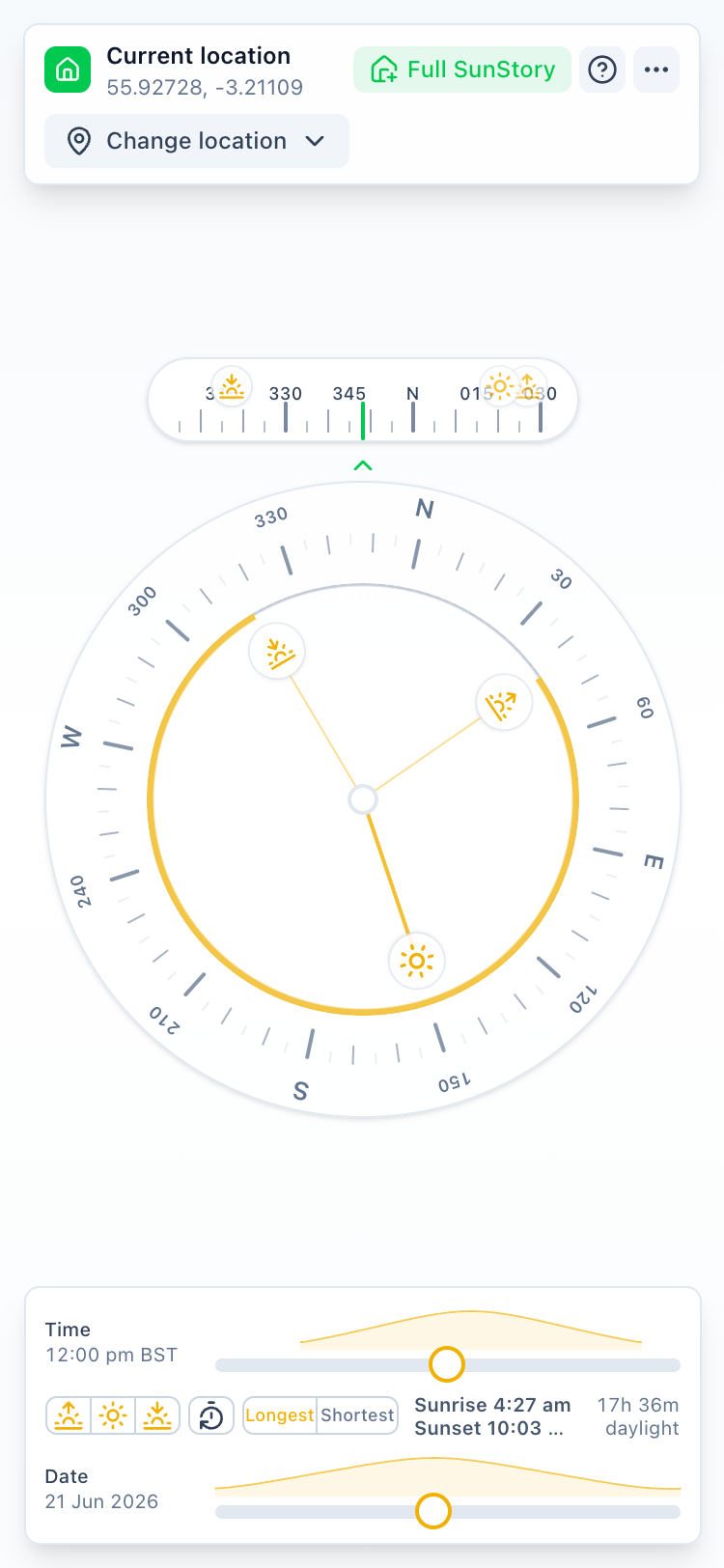
Open SunStory Compass and choose the property on the map. It shows the bearing of sunrise, sunset and the sun at the date and time you select.
On a supported phone, select Start live compass to align the display as you turn. Hold the phone upright, face the area you are checking, and compare the sun marker with the buildings, walls and trees in front of you. You can also change the date and time to check the morning, afternoon or another season.
Open SunStory CompassLook for what blocks the sun
Direction alone cannot tell you whether sunlight reaches the ground, a window or a particular seat. Walk the whole space and look towards the sun, paying attention to:
- neighbouring houses, flats and extensions
- walls, fences, sheds and garages
- hedges and mature trees
- slopes, banks and higher ground
- the home's own roofline and walls
Consider height as well as direction. A top-floor window may clear an obstruction that shades the rooms below. A low winter sun may disappear behind a roof that causes no problem in summer.
Check winter as well as summer
In the UK, winter days are shorter and the sun stays lower in the sky. Buildings, walls and terrain cast longer shadows, so a place that feels open in June can be much darker from November to February.
Use the compass to compare a winter date around late morning, midday and early afternoon. If evening sun matters, check summer too. The goal is to test the times that fit how you would use the home, not every hour of the year.
What this compass cannot show
This compass shows direction. It does not model the buildings, terrain or other obstructions between you and the sun, so it cannot promise that a patio, window or garden bed will be in direct light.
That is where a full SunStory helps. It places the home among 3D Ordnance Survey buildings and terrain, then lets you explore likely sunlight and shade across the day and year. It is useful when you are comparing homes, checking a concern from a viewing, or getting serious about a purchase. Trees are not added automatically yet, so assess leafy cover at the property and add any important trees to the scene yourself.
- Ordnance Survey building context, with terrain
- Explore sun and shade through the year
- Interactive 3D sunlight and shadow scene
- Confirm the right home before checkout
- 30 days to revisit your SunStory
- Secure checkout with Onelink by Stripe
- *SunStory is in early access and still improving. The scene is built from available building and terrain data, and may suggest fences, hedges and walls for you to review. Trees are not added automatically yet, but you can add them yourself to include their shade.